
Austin flooring services
Veterinary Clinic Flooring Austin
Veterinary Clinic Flooring Austin — Veterinary clinic flooring guidance for spaces that need durable, cleanable, slip-conscious surfaces for busy paws and staff.
- Licensed & Insured
- Locally Trusted
- Fast Estimates
- 5-Star Rated
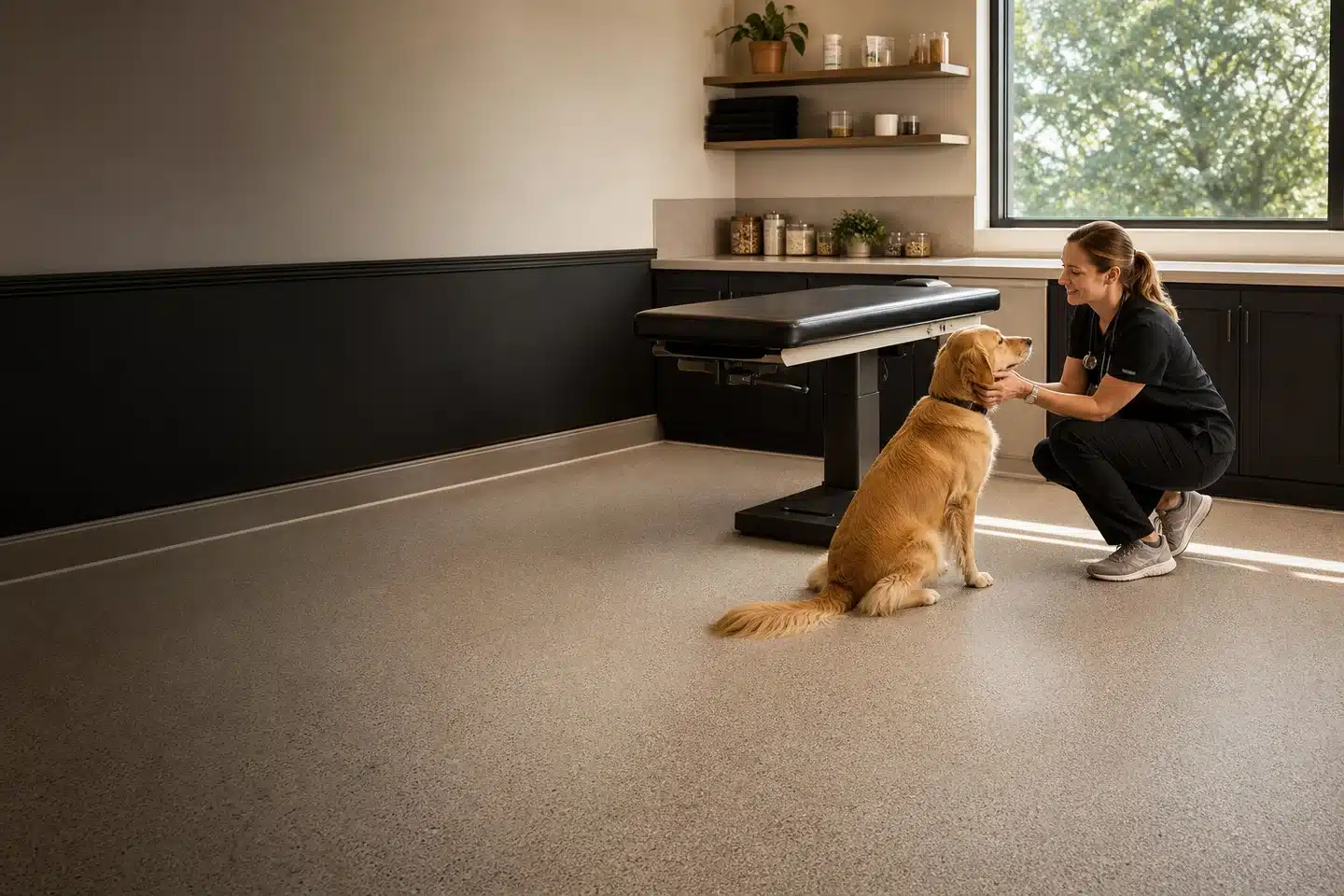
Vet clinics are lively places. One minute it is a calm checkup, the next it is muddy paws, rolling carts, quick cleanups, and a waiting room full of motion. Austin Flooring helps veterinary clinics in Austin choose flooring that is durable, easy to clean, safer underfoot, and ready for the real rhythm of animal care.
Whether you are refreshing a reception area, exam room, treatment space, kennel, or a full clinic remodel, we help you compare flooring options with comfort, durability, maintenance, appearance, and downtime in mind.
Veterinary spaces ask a lot from a floor. It needs to stay practical, look professional, and keep up with the everyday hustle of patients, staff, and pet owners.
- Moisture and cleanup: water bowls, accidents, mopping, and sanitation routines all put pressure on the floor surface.
- Scratch and wear resistance: paws, carriers, carts, and constant traffic can wear down weaker materials fast.
- Slip resistance: a steadier surface helps both staff and animals move through the space more comfortably.
- Appearance: front-facing areas should still feel clean, polished, and welcoming.
- Maintenance: the right floor should make clinic life easier, not create one more thing to worry about.
Popular Flooring Options for Vet Offices and Animal Clinics
The best flooring for a veterinary clinic depends on how each area is used, how often it is cleaned, and how much daily wear it sees.
Commercial Vinyl Flooring
Vinyl is often a practical pick for veterinary clinics because it handles everyday messes better than more moisture-sensitive materials. It also keeps maintenance simpler while still giving the space a clean, updated look.
Luxury Vinyl Plank or Tile
For clinics that want a warmer, more polished feel in waiting rooms, offices, and reception areas, luxury vinyl offers a strong mix of style and durability without the same upkeep demands as natural wood or stone.
Tile and Other Durable Hard Surfaces
In treatment and utility areas, some clinics prefer hard surfaces that are easier to clean and hold up well under repeated use. The best fit depends on the layout, cleaning routine, and how much comfort underfoot matters for the team.
Instead of pushing one product for every room, Austin Flooring helps match each space with a material that works for the way the clinic actually runs.
Where Flooring Matters Most in a Veterinary Clinic
Reception and Waiting Areas
This is the first space clients see, so the floor should feel welcoming while still handling steady traffic and the occasional muddy entrance.
Exam Rooms
Exam rooms need flooring that can handle frequent cleaning, daily wear, and quick turnarounds without becoming difficult to maintain.
Treatment and Procedure Areas
These rooms usually need dependable, easy-clean surfaces that support sanitation and stand up well under heavier use.
Boarding, Kennel, and Back-of-House Spaces
These areas often see the toughest conditions. Moisture, messes, claw traffic, and repeat cleanings make material choice especially important.
What Austin Flooring Helps Clinics Evaluate
- which flooring types fit the pace and needs of the clinic
- how different materials handle moisture, wear, and cleanup
- which options make sense for front-of-house versus back-of-house spaces
- what level of maintenance to expect after installation
- how to balance budget, appearance, and long-term durability
- how to plan installation around business downtime
Why Austin Businesses Choose Austin Flooring
Austin Flooring helps businesses compare options based on real-life use, not just what looks good in a sample board. For veterinary spaces, that means practical advice built around traffic, sanitation, comfort, and daily wear.
- guidance based on real clinic use and cleanup demands
- help choosing flooring for both customer-facing and working areas
- clear planning around installation and project scope
- local service for Austin-area commercial flooring projects
FAQs About Veterinary Clinic Flooring in Austin
What type of flooring is best for a vet clinic?
The best option depends on the room, cleaning routine, traffic, and budget. Many clinics compare vinyl, luxury vinyl, tile, and other durable commercial surfaces. The FTC’s home-improvement guidance can also help you compare written estimates, deposits, and project terms before hiring.
Is vinyl flooring good for dog vet offices?
It often is. Vinyl can be a smart fit for dog vet offices because it is easier to clean and generally handles daily moisture and wear better than more delicate materials. The EPA’s VOC guidance is helpful background when indoor air quality, adhesives, or resilient flooring products are part of the decision.
Can Austin Flooring help with front and back office spaces?
Yes. Different parts of a clinic have different priorities, and Austin Flooring can help compare what makes sense for each one. The ADA design standards are useful context when planning transitions, clear paths, and public-facing spaces.
Do you work with commercial flooring projects in Austin?
Yes. Austin Flooring works with both residential and commercial projects across the Austin area.
How should I prepare before Floors Built for Busy Paws: Veterinary Clinic Flooring in Austin starts?
Move small belongings, fragile items, and anything stored on the floor before the crew arrives. For floors Built for Busy Paws: Veterinary Clinic Flooring in Austin, it also helps to confirm parking, elevator access, pets, and the rooms that need to stay usable during the project.
Can Floors Built for Busy Paws: Veterinary Clinic Flooring in Austin be done over an existing floor?
Sometimes it can, but the existing floor has to be stable, clean, flat, dry, and compatible with the new material. A quick site review is the safest way to decide whether removal or additional prep is needed first.
What subfloor issues should be checked first?
Uneven slab areas, loose boards, squeaks, old adhesive, moisture marks, cracks, and soft spots should be reviewed before materials are ordered. Catching those issues early keeps the finished floor flatter, quieter, and more durable.
How do pets, kids, or heavy traffic affect the flooring choice?
Busy homes usually need materials that handle scratches, spills, cleaning, and repeated foot traffic well. The best choice may be different for bedrooms, stairs, kitchens, rental units, and main living areas.
What affects the cost of Floors Built for Busy Paws: Veterinary Clinic Flooring in Austin in the Austin area?
Cost depends on material, square footage, demolition, subfloor prep, trim, transitions, stairs, layout complexity, and whether furniture or appliances need to be moved. A written estimate should separate those items clearly enough to compare options.
How long does a typical floors Built for Busy Paws: Veterinary Clinic Flooring in Austin project take?
Small rooms can often move faster than whole-home projects, but timing depends on prep work, material type, drying or acclimation needs, and the number of connected rooms. The schedule should also account for cleanup, trim, and when furniture can return.
Should baseboards and transitions be planned before installation?
Yes. Baseboards, shoe molding, reducers, stair nosing, thresholds, and doorway transitions affect both the final look and the project scope. Planning those details early helps avoid mismatched trim or last-minute change orders.
How are moisture concerns handled before new flooring?
Moisture checks are important for slabs, bathrooms, kitchens, entries, laundry rooms, and any room with prior leaks. If moisture is present, the plan may need different materials, underlayment, repairs, or additional drying time before installation.
Can the work be phased room by room?
Many projects can be phased so bedrooms, kitchens, stairs, or work areas remain usable. A phased plan should identify room order, furniture staging, dust control, access, and when each area can be walked on again.
What should be included in a written flooring estimate?
A useful estimate should list materials, removal, prep, underlayment, trims, transitions, stairs, disposal, labor scope, and any exclusions. It should also explain assumptions so you know what might change after old flooring is removed.
When is repair better than full replacement?
Repair can make sense when the damage is localized and the surrounding floor is still stable, level, and visually consistent. Replacement is usually better when wear is widespread, moisture damage is present, or matching the existing material is not realistic.
Talk With Austin Flooring About Your Clinic Project
If you are planning flooring for a veterinary clinic, dog vet office, or animal hospital in Austin, Austin Flooring can help you compare materials based on traffic, cleanup, appearance, and downtime so the finished space works hard and still feels welcoming.
Contact Austin Flooring or start an Instaquote.
Related Austin Flooring pages
These related pages may help with the next step in planning this flooring project.