Texas Flooring Installers

Laminate Flooring Installer in Austin TX

Austin Flooring Company installs laminate flooring in Austin TX for dry, climate-controlled rooms where a floating click-lock floor makes sense for the way the space is used. Laminate can be a practical wood-look option for bedrooms, living rooms, upstairs areas, offices, rental turns and budget-controlled remodels, but it should not be treated as waterproof flooring or as the right answer for every room. A good laminate project starts with the existing floor, slab condition, underlayment, door clearances, transitions, expansion space and the selected product instructions. Those details affect whether the floor lays flat, sounds right underfoot and has room to move without avoidable stress. Austin Flooring Company can review owner-supplied laminate or help compare current product options before installation. To start, share room photos, rough dimensions, the product name if selected and any known moisture, buckling or transition concerns so the quote can reflect the real scope rather than square footage alone.

  • Licensed & Insured
  • Locally Trusted
  • Fast Estimates
  • 5-Star Rated

Laminate Flooring Installation Services in Austin TX

Austin Flooring Company installs laminate floors as complete room systems, not just as loose planks clicked together. The installation scope can include removal of existing flooring, review of the surface below, underlayment planning, door and trim coordination, transition placement, plank direction and job sequencing for occupied homes or rentals. Laminate works best when the selected product, room use and substrate conditions line up before scheduling. If the room has active moisture, uneven slab areas, carpet, loose flooring or a wet-area use case, the first decision may be whether laminate is appropriate at all.

For Austin homes and rental properties, a useful laminate quote should identify the rooms, existing flooring, access, furniture needs, material source and deadline. That keeps the conversation focused on the installation conditions that influence the finished result. Request a scope-based laminate flooring quote when the goal is a dry-room update with clear product, prep and transition expectations.

Floating Click-Lock Laminate Installation

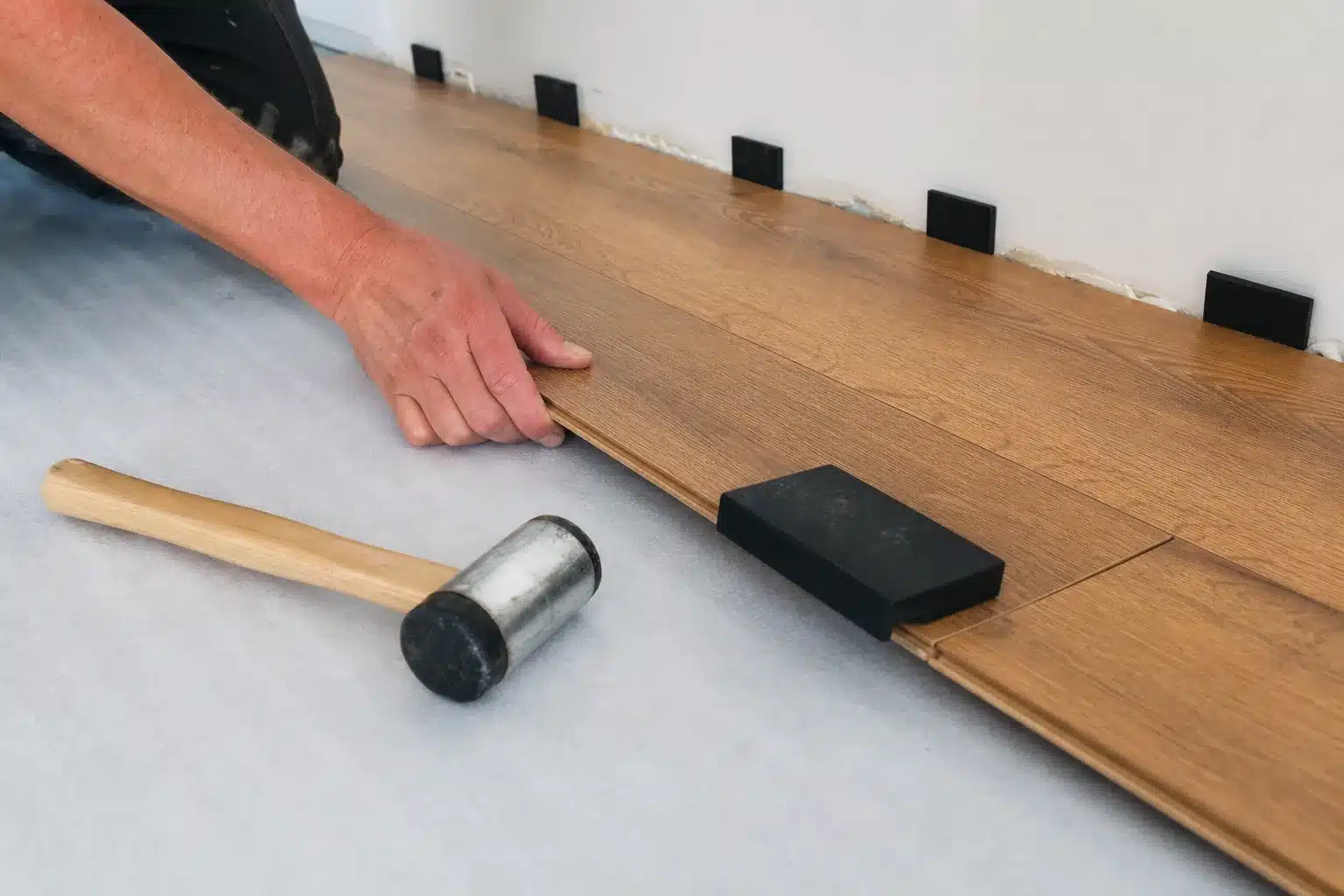
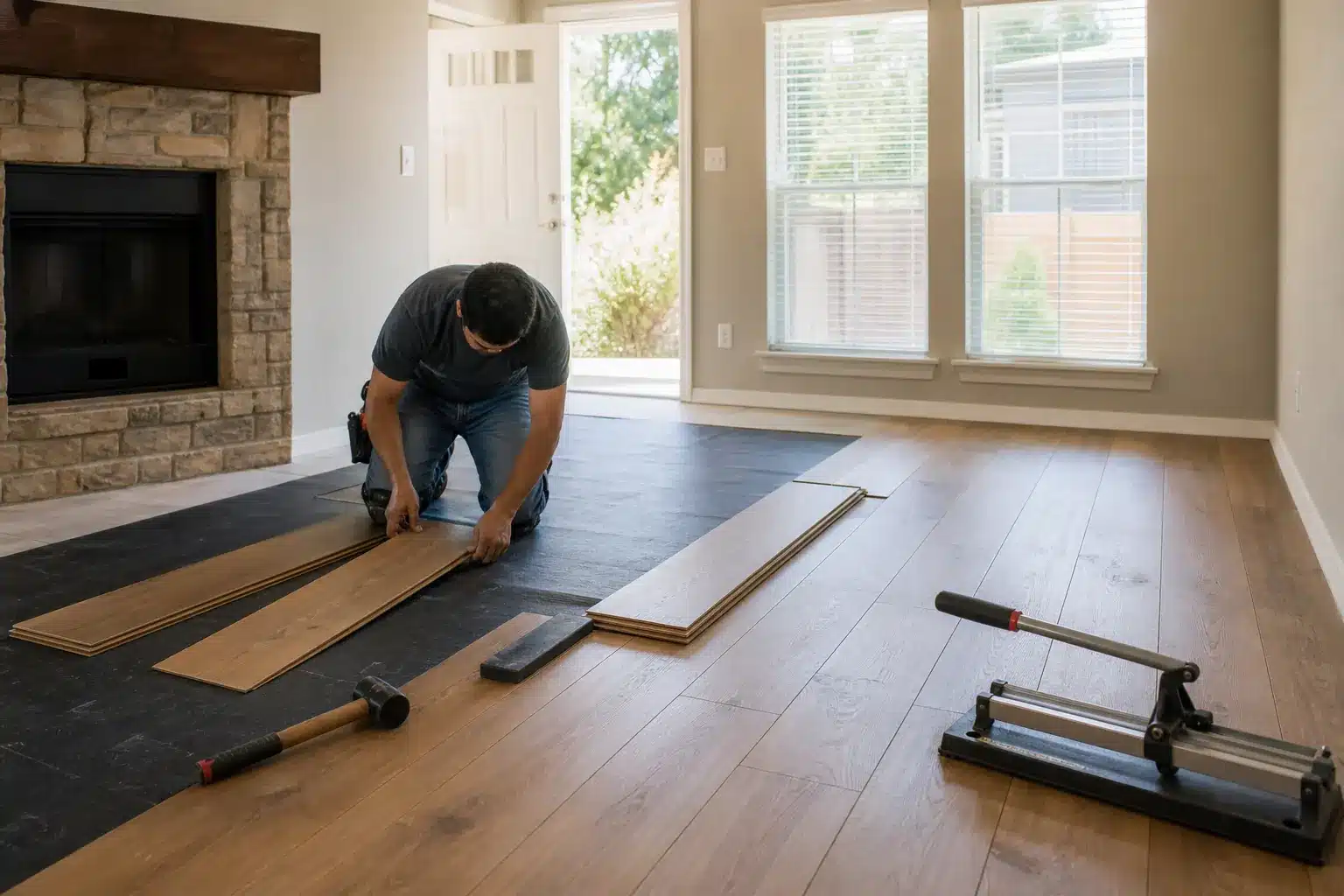
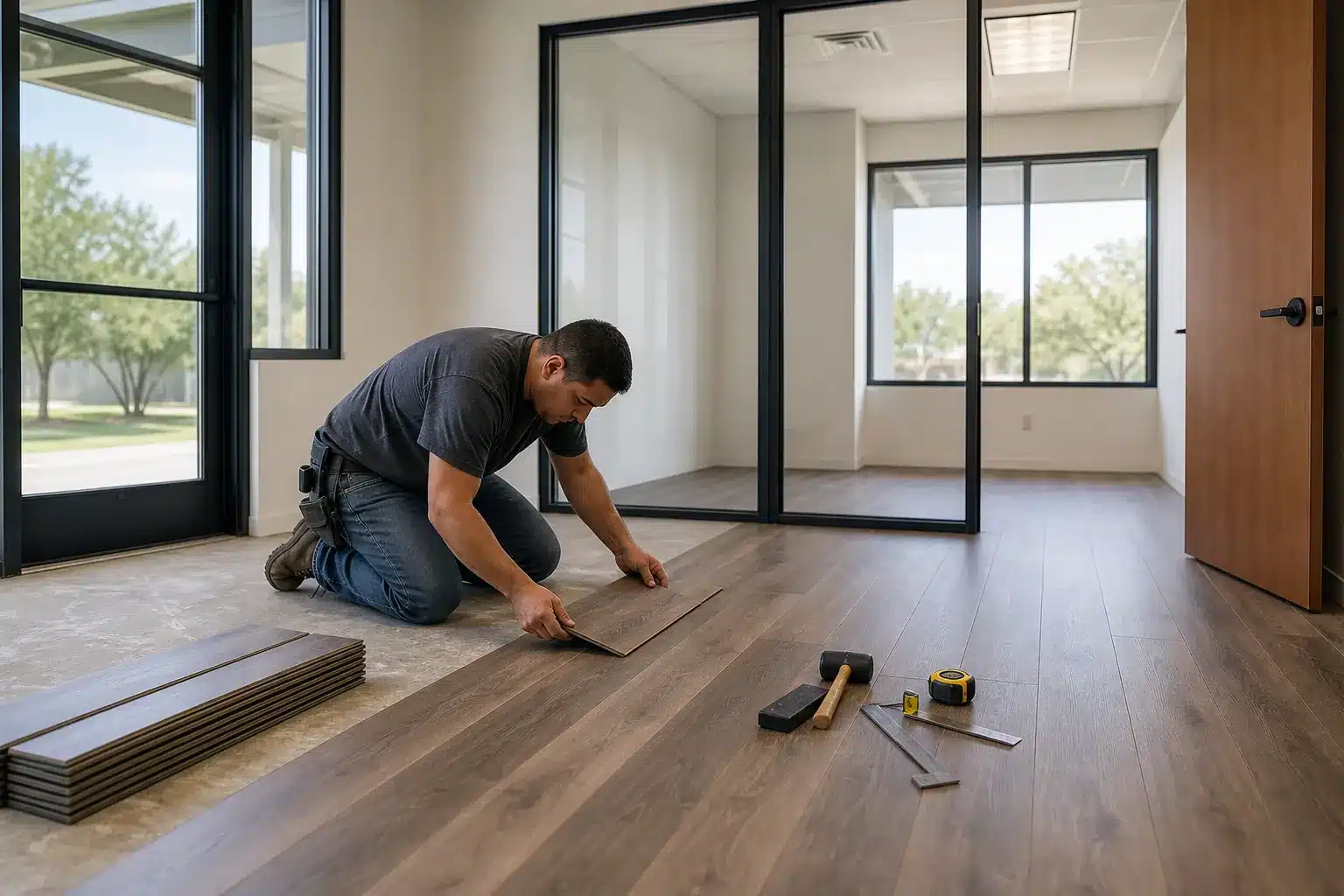
Most laminate flooring is installed as a floating click-lock system over a suitable surface and approved underlayment. That means the floor normally needs room to expand and contract instead of being fastened like traditional nail-down wood. The locking profile, plank thickness, attached pad, room shape and transition points all affect how the installation should be planned.

In an Austin bedroom or office over a concrete slab, the installer needs to look at flatness, surface stability and vapor protection before the first row is laid. A floating floor can perform well when those conditions are controlled, but it can also create noise, movement or joint stress if the substrate is ignored. The practical rule is simple: confirm the product instructions, floor condition and transition layout before scheduling. Ask Austin Flooring Company to review laminate installation conditions before committing to a product or installation date.

Owner-Supplied and Contractor-Sourced Laminate

Austin Flooring Company can review owner-supplied laminate flooring or discuss contractor-sourced options when the material has not been chosen yet. Owner-supplied material can work when the cartons are correct, undamaged, acclimated as required, available in sufficient quantity and paired with the proper underlayment, trim and transitions. The risk is that missing accessories, mixed lots or discontinued material can delay the project or limit future repair options.

For a rental turn, a property owner may already have boxes on site. Before scheduling, the useful next step is to confirm square footage, waste allowance, product instructions, carton condition, plank compatibility and whether extra material will remain after installation. If material has not been purchased, Austin Flooring Company can help compare current laminate options by room use, traffic, appearance and repair-stock availability. Confirm your selected material before the installation date to avoid avoidable changes on site.

Where Laminate Flooring Works Best in Austin Properties

Laminate flooring is strongest as a dry-room, wood-look surface for spaces where cost control, appearance and installation efficiency matter. It is often considered for bedrooms, living rooms, offices, upstairs areas, rental properties and light-commercial rooms that do not face regular standing water. The best use case is not just “low budget”; it is a room where the product’s movement, moisture limits and wear rating match the daily use.

Austin properties often include concrete slabs, mixed flooring transitions and occupied remodel conditions. Those realities make room selection important. A laminate floor that works well in a bedroom may be a poor fit for a laundry area with water exposure. A product that looks good in one small room may show pattern repeat across a larger open area. Review laminate fit by room before deciding whether laminate, LVP, tile or another material is the safer choice.

Bedrooms Living Rooms Offices and Upstairs Areas

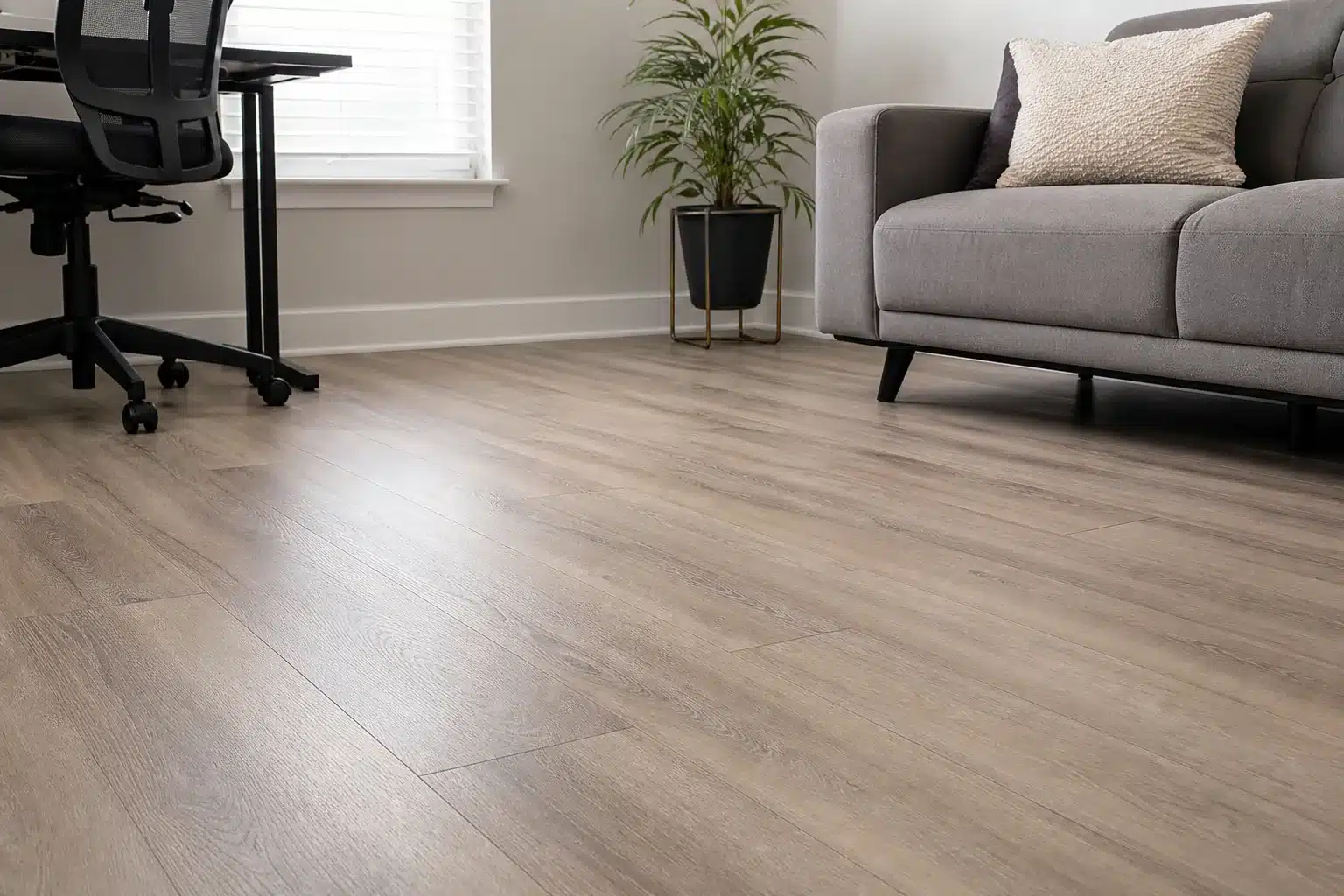
Bedrooms, living rooms, offices and upstairs areas are often good laminate candidates because they are usually dry, climate-controlled spaces with predictable foot traffic. Laminate can give these rooms a clean wood-look update without the same material cost profile as hardwood or natural stone. The decision still depends on the selected product, subfloor, sound expectations and transition plan.

For an upstairs office, underlayment and door clearance can matter as much as color. For a living room connected to tile or LVP, the transition height should be planned before installation starts. The decision rule is to choose laminate where dryness, traffic and appearance needs fit the product, then review preparation and accessories before scheduling. If the room has pets, rolling chairs, heavy furniture or sun exposure, those conditions should be discussed during the quote.

Rental Turns and Budget-Controlled Remodels

Laminate can be useful for rental turns and budget-controlled remodels when the goal is a presentable, dry-room floor with a clear installation timeline. The material can help standardize bedrooms or living areas across units, but consistency depends on product availability, spare material and a realistic repair plan. A discontinued laminate can make future plank replacement difficult, even when the original installation was sound.

For landlords and property managers, the better conversation is not “cheapest floor available.” It is whether the selected laminate can handle the room use, whether extra boxes will be retained, how transitions will meet existing flooring and whether the project can be phased around occupancy. Rental portfolio consistency and turnaround should be planned together. Request a scope-based laminate quote with room list, photos, vacancy dates and selected product details if timing matters.

Laminate Floor Prep Underlayment and Moisture Review

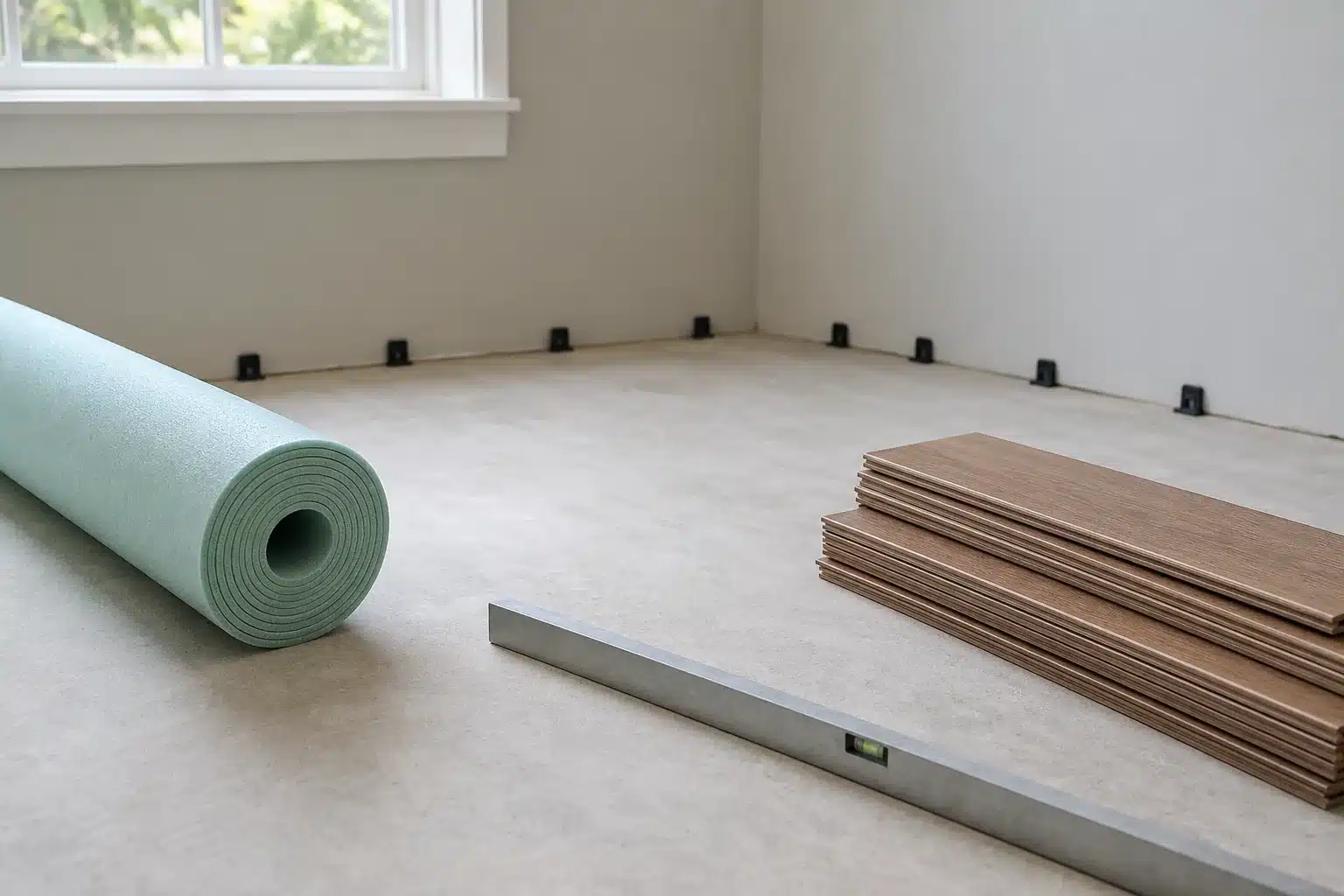
Floor preparation is one of the main reasons laminate projects succeed or fail. A floating laminate floor needs a surface that is stable, clean, suitable for the product and within the manufacturer’s requirements. Existing carpet, loose flooring, active moisture, unstable patches or excessive unevenness can create problems that no plank color can solve. On concrete slabs, vapor protection and product-specific moisture instructions need to be reviewed before installation.

Underlayment is also not a one-size decision. Some laminate includes an attached pad; some products still require a separate vapor barrier or approved underlayment depending on the substrate. Door clearances, baseboards, quarter round, transitions and expansion space should be considered before the material is cut. Review floor and subfloor conditions before installation so the quote reflects prep work, not just visible square footage.

Concrete Slabs Flatness and Vapor Protection

Laminate can be installed over a concrete slab only when the slab and selected product conditions allow it. The slab needs to be stable, appropriately dry for the product, clean and flat enough for the locking system. Vapor protection may be required depending on the laminate and underlayment instructions. A cured slab is not automatically ready for every laminate floor.

In many Austin homes, existing flooring removal reveals slab cracks, adhesive residue, old patching or uneven transitions. Those conditions should be reviewed before scheduling because they can change prep needs and installation timing. The practical rule is to inspect the slab, confirm moisture and underlayment requirements, then decide whether the product is a suitable fit. Upload photos of the exposed floor or existing surface when requesting a quote.

Expansion Gaps Transitions and Door Clearance

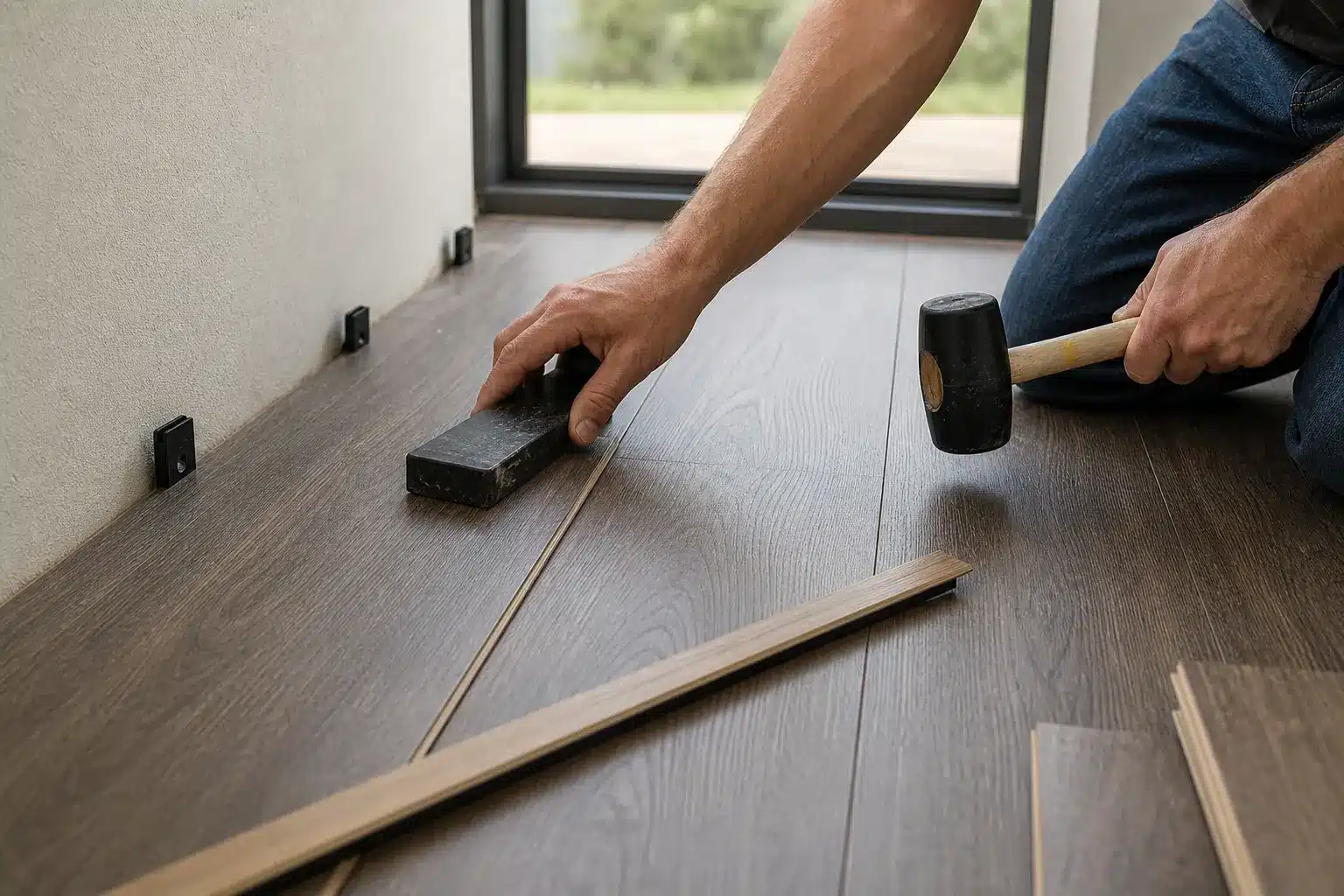
Expansion space, transitions and door clearance are small details that can have a large effect on a laminate floor. Because laminate commonly floats, the floor usually needs room at walls, cabinets, doorways and fixed objects so it can move as intended. If the floor is pinched by trim, tight transitions or heavy fixed elements, movement stress can show up as buckling, gapping or noise.

Austin remodels often involve mixed floors: carpet to laminate, tile to laminate, hallway to bedroom or office to living area. Those transitions should be planned before installation so height differences, doorway cuts and trim expectations are clear. The decision rule is to confirm where each floor begins and ends before ordering accessories. Review laminate installation conditions if the project includes many doorways, closets or adjacent flooring surfaces.

Water-Resistant Laminate vs LVP and Tile

Water-resistant laminate is not the same thing as universally waterproof flooring. Some laminate products offer improved resistance to everyday spills, but performance depends on the product, locking system, edges, exposure, cleanup time and installation instructions. That distinction matters in Austin homes where buyers may compare laminate with LVP or tile for kitchens, entries, laundry rooms and bathrooms.

Laminate can be a strong option for dry rooms where wood-look appearance and budget control matter. LVP may be a better fit when moisture exposure is expected. Tile may be better where heat, wet-area planning, hard-surface durability or certain design goals are central. The point is not to make one material win every room. It is to match the room, exposure and maintenance expectations to the right floor. Review laminate fit by room before choosing a product based on marketing language alone.

Dry-Room Value vs Moisture-Risk Rooms

Laminate’s value is strongest in dry, climate-controlled spaces where the floor is not expected to handle repeated wet exposure. Bedrooms, offices, upstairs living areas and many rental rooms can fit that profile. Bathrooms, laundry rooms, wet entries or spaces with known moisture problems require more caution because water-resistant labeling does not remove the need for product-specific limits.

A family replacing carpet in bedrooms may get the appearance and maintenance update they want from laminate. The same product may be a poor choice next to a shower or exterior door with regular water tracking. The practical decision rule is to choose laminate where dryness is reliable and select another floor type when moisture exposure drives the project. Ask whether laminate, LVP or tile is the safer fit before buying material.

Product Instructions and Warranty Conditions

Product instructions and warranty conditions should guide the installation plan. Laminate products can differ in subfloor requirements, underlayment rules, expansion spacing, approved room uses, moisture limits and acclimation instructions. A product that allows one condition may reject another. Ignoring those instructions can create performance problems and may affect future warranty support.

For owner-supplied laminate, Austin Flooring Company needs the product name, manufacturer instructions and accessory requirements before scheduling. For contractor-sourced options, the product should be selected with the room conditions in mind. The useful next step is to confirm the selected laminate before finalizing the job date. If the instructions conflict with the room or substrate, it is better to identify that early than to force the wrong material into the wrong space.

Laminate Floor Repair and Replacement in Austin TX

Laminate repair depends on the type of damage, the installation method, the availability of matching planks and whether the original problem is still active. A single scratched or chipped plank may be a localized issue. Buckling, swelling, widespread gapping or repeated joint failure can point to moisture, movement restriction, flatness problems or product limitations. Repair is not always the most practical answer.

Austin Flooring Company can review laminate floor repair and replacement situations by looking at photos, material information, affected room size and transition points. If matching material exists and the damage is isolated, a plank replacement may be possible. If the product is discontinued or the damage is widespread, replacing the room may create a cleaner and more durable result. Ask whether the floor can be repaired before assuming a full replacement is required.

Buckling Gapping Swelling and Damaged Planks

Buckling, gapping, swelling and damaged planks usually need diagnosis before a repair decision is made. Buckling can be related to moisture, tight expansion space, heavy fixed objects or installation stress. Gapping may involve movement, locking-system issues, subfloor conditions or product behavior. Swelling often suggests moisture exposure or edge damage.

A damaged plank in a dry bedroom is different from swelling near a refrigerator, entry door or laundry area. The first may be a localized repair; the second may require solving the moisture source and reconsidering material fit. The decision rule is to separate cosmetic damage from active conditions. Share close-up and room-wide photos, plus any spare-box information, so Austin Flooring Company can judge whether a repair path is realistic.

When a Whole-Room Replacement Is More Practical

A whole-room laminate replacement may be more practical when matching planks are unavailable, damage is widespread, the floor has repeated movement problems or the selected product was wrong for the room. Replacing only a few planks can be difficult when the floor must be unlocked row by row, when furniture blocks access or when the original material has changed color or is discontinued.

For rental properties, replacing the room with a current, available laminate may reduce future repair headaches if spare material is retained. For homeowners, a replacement can also address old transitions, sound concerns and underlayment choices at the same time. The useful next step is to compare the repair cost, material availability and likely finished appearance against a full-room reset before choosing.

Laminate Product Selection for Traffic Budget and Appearance

Laminate product selection should balance traffic, appearance, room use, product instructions and future repair planning. Color and price matter, but they are not enough. Traffic rating, plank thickness, attached pad, edge treatment, locking profile, visual repeat, texture, carton availability and matching trim can all affect whether the floor is a good fit. The right laminate for a guest bedroom may not be the right choice for a busy rental living room.

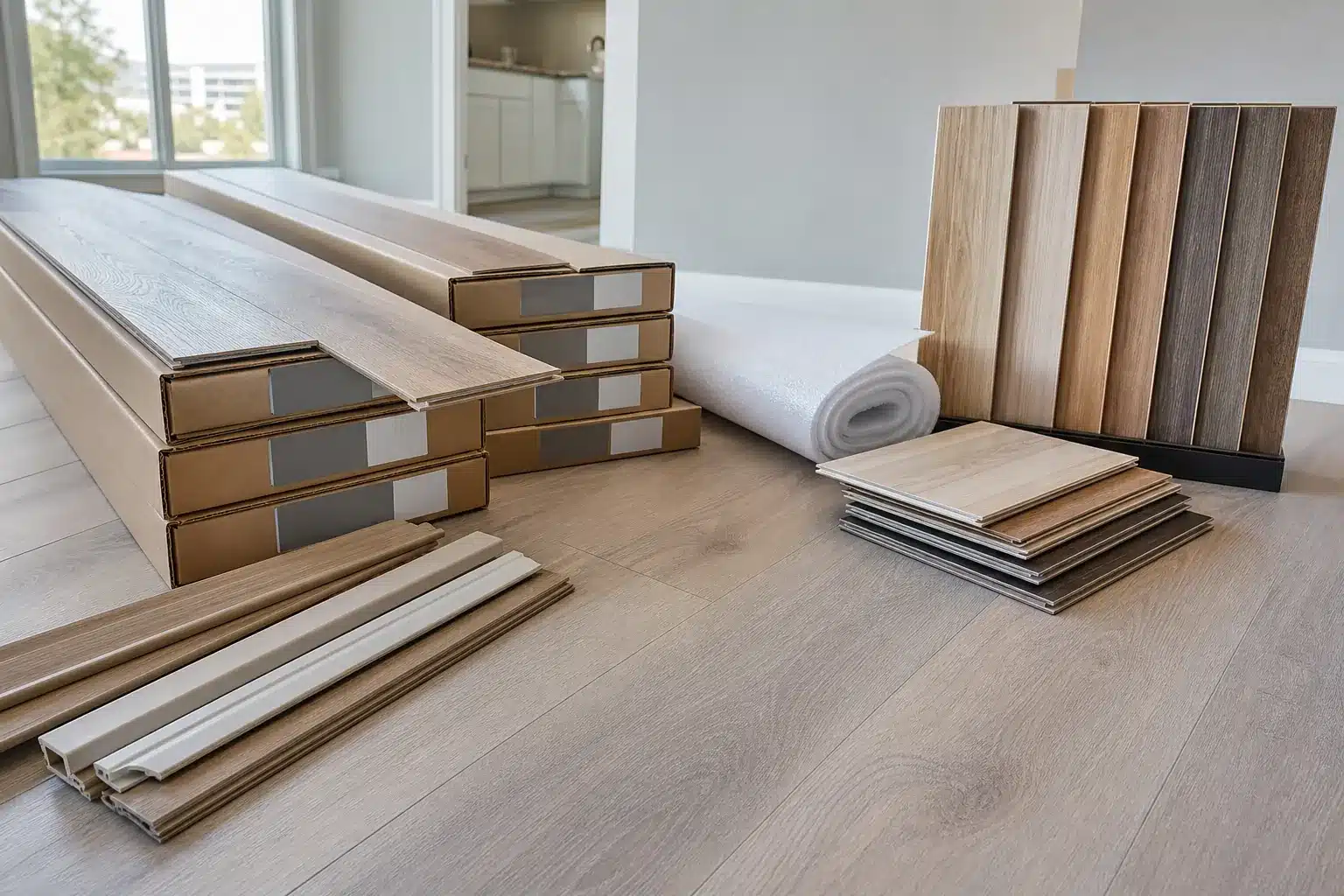
Austin Flooring Company can help compare current laminate options or review material a customer has already selected. The goal is to avoid buying a product that looks appealing online but creates installation, maintenance or repair problems in the actual room. Compare current laminate options by traffic, use, accessories and future availability before the material order is finalized.

AC Ratings Plank Thickness and Attached Pad

AC rating, plank thickness and attached pad can help compare laminate products, but they do not create a universal answer for every room. Higher traffic areas may need a product rated for heavier use, while a quiet bedroom may prioritize appearance, sound and budget. Attached pad can simplify one part of the selection, but it does not automatically replace every moisture or underlayment requirement.

For an Austin rental office or living room, the product should be checked against expected traffic, furniture movement and cleaning habits. For a bedroom, comfort and appearance may carry more weight. The decision rule is to choose the product for the room and read the instructions, not just the label on the display. Confirm your selected material before installation so rating, pad and accessory requirements are clear.

Pattern Repeat Edge Detail and Future Repair Stock

Pattern repeat, edge detail and future repair stock affect how laminate looks after installation and how easy it is to maintain later. Some products repeat the same printed plank visual more often, which can be noticeable in open rooms. Beveled edges, texture and plank width also change the finished appearance. Spare material matters because matching a discontinued laminate can be difficult.

In a larger Austin living area, the installer may need to mix planks from multiple cartons and plan layout to reduce obvious repeats. In a rental portfolio, keeping extra boxes from the same lot can make later plank replacement more realistic. The practical next step is to order enough material for the project and retain leftovers. Ask Austin Flooring Company to review material quantity and spare-stock planning before installation.

Laminate Flooring for Homes Rentals and Light Commercial Spaces

Laminate flooring can serve homeowners, landlords and light-commercial spaces when the room use, product and installation conditions are aligned. It is often chosen for dry rooms where a wood-look floor, controlled material budget and efficient installation are priorities. The page owner should be clear: this is not a promise that laminate belongs everywhere, and it is not a substitute for LVP or tile in every wet or heavy-use setting.

Austin projects may involve occupied homes, rental turns, offices, small retail rooms or mixed-use spaces. Each setting changes the schedule, furniture plan, access and transition details. A homeowner may need phasing around daily use. A property manager may need a vacancy window. A business may need work timed around opening hours. Plan the project schedule early so the quote reflects real constraints.

Occupied Home Scheduling and Furniture Planning

Occupied home scheduling affects laminate installation because furniture, pets, closets, bedrooms and daily access all have to be managed. A room may need to be cleared before work starts, or the project may be phased room by room if the home remains in use. Doorways, hallways and stairs can also affect material staging and waste handling.

For an Austin homeowner replacing carpet in multiple bedrooms, the quote should identify which rooms are available, whether furniture will be moved, how closets are handled and whether baseboards or trim are part of the scope. The decision rule is to plan access before the crew arrives. Upload room photos and note furniture needs when requesting a quote so scheduling can be realistic.

Rental Portfolio Consistency and Turnaround

Rental portfolio consistency depends on choosing laminate products that are available, appropriate for the room and practical to repair later. A landlord may want the same look across several units, but product lines change. Keeping extra material, documenting the product and using consistent transitions can make future repairs easier. Turnaround also depends on whether old flooring, adhesive, slab issues or furniture are present.

For an Austin rental turn, the useful quote information includes unit access, vacancy date, room list, existing flooring, material preference and any deadline before new occupancy. The goal is to reduce surprises that slow the project. Plan the project schedule and confirm the material early if the floor must be ready between tenants.

The Long-Term Value of a Proper Laminate Installation

The long-term value of laminate flooring comes from matching the product to the room and installing it under the right conditions. A proper installation cannot make laminate waterproof or immune to damage, but it can reduce avoidable movement, noise, joint stress and premature failure. Preparation, expansion space, underlayment, transitions and product selection all contribute to the result.

For Austin homeowners and property managers, value also includes easier quote planning, fewer surprises during installation and a clearer maintenance path after the project. Retaining spare material, documenting product instructions and understanding cleaning limits can help protect the investment. Review laminate installation conditions when the goal is not just a new surface, but a floor that fits the property’s use.

Reducing Avoidable Movement Noise and Premature Failure

Avoidable movement, noise and premature failure are often tied to preventable installation conditions. Uneven substrate, incorrect underlayment, tight expansion, missing transitions or unsuitable room use can create problems after the floor is in service. A floating laminate floor needs enough support below and enough movement allowance around the edges.

An Austin office with rolling chairs, a bedroom over slab and a rental living room may each need different product and underlayment choices. The practical rule is to solve preparation and product-fit questions before installation, not after the floor starts making noise or separating. Review floor and subfloor conditions before the job begins.

Keeping Spare Material and Maintenance Instructions

Keeping spare material and maintenance instructions is a simple way to protect a laminate project after installation. Extra planks from the same order can make future localized repair more realistic. Product instructions explain cleaning limits, moisture exposure, furniture protection and conditions that may affect warranty support. Without that information, small problems can become harder to solve later.

For property managers, product records help keep portfolio floors consistent. For homeowners, spare material can matter if a plank is damaged years later. The useful next step is to retain cartons, product labels, trim information and leftover pieces after installation. Ask Austin Flooring Company what material details should be saved once the project is finished.

Request a Laminate Flooring Quote in Austin TX

Request a laminate flooring quote in Austin TX when the rooms, material and preparation questions are ready to be reviewed. Useful quote information includes room photos, rough measurements, existing flooring type, slab or subfloor concerns, furniture needs, preferred timeline, selected product details and any matching or repair goals. If the laminate is owner-supplied, include the product name, carton count, underlayment plan and accessory information.

A scope-based quote helps separate installation labor from removal, prep, transitions, trim, underlayment, moisture review and scheduling needs. Austin Flooring Company can review whether laminate fits the room, whether another material may be safer and what information is still needed before scheduling. Upload photos and start your quote with the clearest view possible of each room, doorway, transition and existing flooring condition.

Laminate Flooring Installer FAQs

Is laminate flooring a good choice for Austin homes and rental properties?

Yes, laminate can be a good choice for Austin homes and rental properties when it is used in dry, climate-controlled rooms and matched to the expected traffic. Bedrooms, living rooms, offices and many rental rooms can fit laminate well. It is less appropriate for active moisture areas or rooms where waterproof performance is the main requirement. For rentals, spare material and product availability matter because future repairs may need matching planks. The decision rule is to choose laminate for suitable dry rooms and review alternatives for wet or high-risk spaces.

Can laminate flooring be installed over a concrete slab?

Laminate can be installed over a concrete slab when the slab and selected product instructions allow it. The slab should be stable, clean, flat enough for the locking system and suitable from a moisture standpoint. Vapor protection or a specific underlayment may be required depending on the product. Existing adhesive, cracks, old patching or uneven areas can change the preparation scope. Before installation, share photos of the current floor and any known slab issues so the quote can account for flatness, moisture and accessory requirements.

What underlayment or vapor protection does laminate need?

The correct underlayment or vapor protection depends on the laminate product, substrate and manufacturer instructions. Some laminate has an attached pad, but that does not automatically answer every moisture or sound requirement. Concrete slabs may require vapor protection; upstairs rooms may raise sound or comfort questions; transitions may affect thickness choices. The practical rule is to confirm the product instructions before buying underlayment separately. If material is already purchased, send the product name and installation guide so the needed accessories can be reviewed.

Is water-resistant laminate the same as waterproof flooring?

No, water-resistant laminate is not the same as universally waterproof flooring. Some products resist ordinary spills better than older laminate, but performance depends on the product, edges, joints, exposure time, cleanup and installation instructions. Bathrooms, laundry rooms and active moisture areas may need LVP, tile or another better-suited material. A water-resistant label should start a product-fit conversation, not end it. The decision rule is to use laminate where moisture exposure is limited and choose a different floor when water risk drives the project.

What AC rating should I choose for bedrooms rentals or offices?

The right AC rating depends on the room use, expected traffic and selected product line. A quiet bedroom may not need the same traffic rating as a rental living area or small office. Rating is still only one factor; plank thickness, locking system, edge treatment, attached pad, warranty conditions and future availability also matter. For rentals or offices, choose a product that fits cleaning, furniture and traffic expectations. Before buying, compare the product instructions and room use instead of assuming one rating is right for every space.

Can damaged laminate planks be repaired without replacing the whole floor?

Sometimes damaged laminate planks can be repaired, but it depends on the damage, installation layout and whether matching material is available. A single chipped plank in a dry room may be more repairable than widespread swelling, buckling or gapping. Many floating floors require rows to be unlocked to reach the damaged area, which can affect labor and feasibility. If the original product is discontinued, a whole-room replacement may look better than a mismatched patch. Send close-up and room-wide photos plus spare-material details for review.

Can Austin Flooring Company install owner-supplied laminate flooring?

Austin Flooring Company can review owner-supplied laminate flooring when the product, quantity, condition and accessories are clear. The material should be undamaged, appropriate for the room and available in enough quantity for cuts and waste. Underlayment, vapor protection, transitions, stair pieces and trim should also match the product requirements. Owner-supplied material can save confusion when it is complete, but it can delay a project when cartons are short or accessories are missing. Confirm the selected material before scheduling.

What photos measurements and product information are needed for a laminate quote?

For a laminate quote, send photos of each room, the existing flooring, doorways, transitions, closets and any visible slab or subfloor issues. Rough measurements help, even if final conditions still need review. If material is selected, include the product name, carton count, underlayment plan and accessory details. Note furniture needs, preferred timing, pet or occupancy constraints and whether old flooring must be removed. This information helps Austin Flooring Company separate installation, prep, transitions and scheduling needs in the quote.